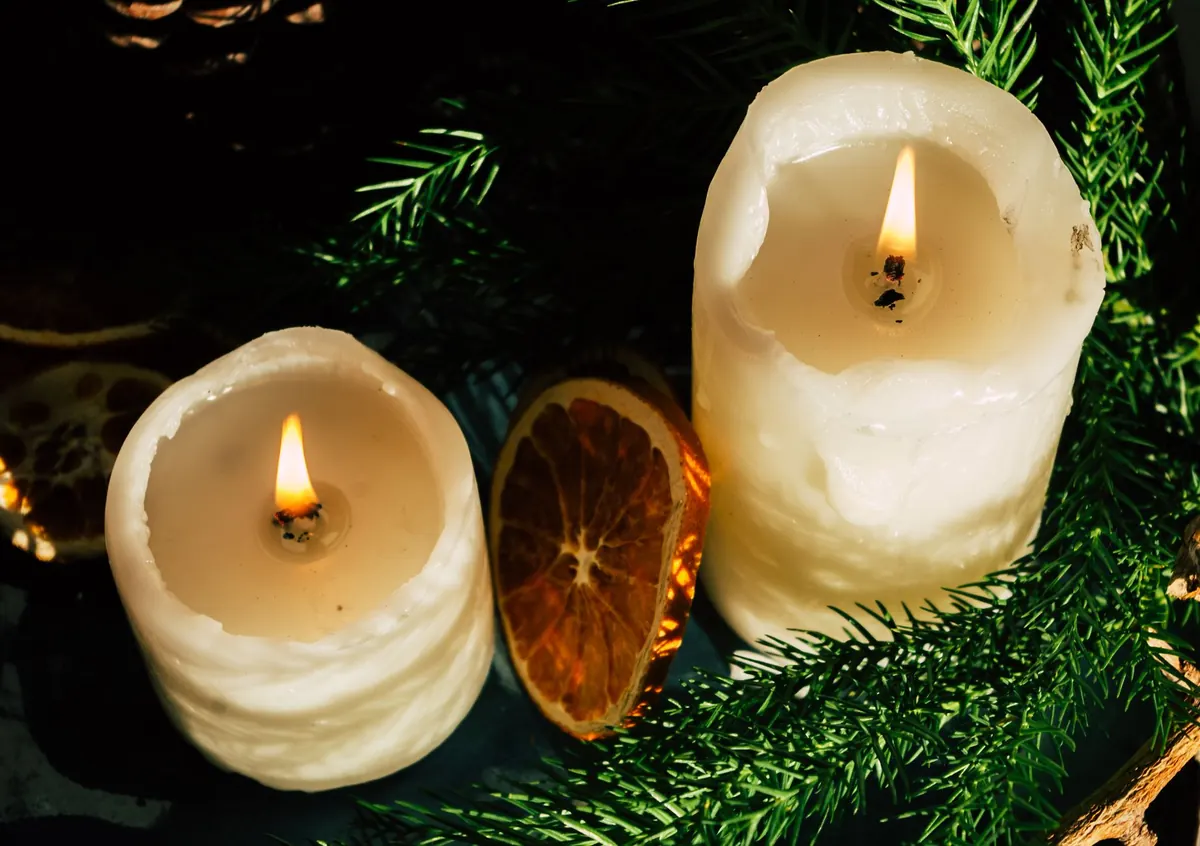
Soy vs. Beeswax vs. Coconut Wax Candles: A Practical Comparison for Home Scent
A candle can be beautiful and still disappoint. The wick drowns two thirds of the way down the jar. The scent that felt so generous in the shop never quite reaches the sofa. The surface develops a pale film that looks like dust and won't wipe away. Almost every time, the wax is behind it.
Soy, beeswax and coconut wax are the three you meet most often in artisanal candles, and each behaves differently in a real room. What follows is a working comparison — burn behaviour, scent throw, appearance, upkeep — so you can choose the one that suits the way you actually burn candles, not just the way they look on a shelf.
Why the wax matters more than the name on the label
Wax is not a neutral carrier for fragrance. It sets the melting point, which sets how wide the pool of melted wax becomes, which sets how hot the surface runs and how quickly the fragrance molecules are released into the air. The same fragrance oil, at the same percentage, can smell rounder and slower in one wax and sharper and faster in another. Wax also determines how large a wick the candle needs, which is why two jars of identical diameter can burn completely differently.
Most artisanal candles are blends, and that is not a flaw. Pure coconut wax is soft enough that makers usually blend it with soy or another firmer wax to give it structure; beeswax is sometimes softened with soy so it pours more evenly. Read the wax list on the label rather than the front of the jar. A candle described as "coconut wax" is often a coconut-and-soy blend, and it will behave like one.
Burn behaviour: heat, pace and the melt pool
Soy wax
Soy has a low melting point and a soft, creamy texture. It burns cooler and more slowly than paraffin, forms a gentle pool, and generally produces little soot. Because the wax is soft, it needs a slightly larger wick than a harder wax of the same diameter, and it has a real tendency to tunnel if you put it out before the pool has reached the edge of the jar. It also softens in warmth: a soy candle left on a sunny windowsill or in a hot car can slump and lose its smooth top.
Beeswax
Beeswax is the hardest of the three and has the highest melting point. It burns longer per gram than soy or coconut, with a steady, warm flame and a faint honey sweetness that no fragrance can fully hide. It is the most forgiving wax at the wick and the least forgiving at the pour: it shrinks as it cools, so makers often pour in stages to avoid a sunken centre or a crack. As a buyer you mostly notice the benefits — slow burn, good shape retention, pillars that hold their form instead of softening. Give it a slightly shorter trim than you would a soy wick.
Coconut wax
Coconut wax is soft and low-melting, close to soy in texture but usually creamier. It burns slowly and cleanly, and it takes fragrance unusually well. Its weakness is heat sensitivity: a coconut blend can dent, lean or sweat in transit, and the soft wax can flood a wick that is a size too small, which shortens the burn. Excellent in containers, poor for anything freestanding.
Scent throw: what you smell cold, and what fills the room
Two numbers matter. Cold throw is what you smell with the lid off and no flame; hot throw is what you smell while it burns. A candle can be generous cold and disappointingly quiet hot, and wax is a big part of why.
Soy sits in the middle: reliable, polite, rarely overpowering. It rewards patience. Soy candles often smell thin in the first days after pouring and round out over a week or two of curing, as the fragrance settles into the wax. If a soy candle seems weak, let the pool grow wide before judging it, and give a freshly delivered candle a week in a cupboard.
Beeswax throws less fragrance than the other two at the same fragrance load, and its own honey note is part of the reason. That is not a fault, but it does narrow the palette: warm accords — amber, resin, wood, spice, orange peel — sit naturally in beeswax, while crisp green or delicate floral notes can get muddled. Choose beeswax when you want the wax itself to be part of the scent, not just the vehicle.
Coconut is usually the most generous of the three, releasing fragrance quickly and filling a large room at a moderate load. In a small bedroom, that generosity can tip into too much; burn it for twenty minutes and see.
Worth remembering: wick size, room temperature and draughts affect throw as much as wax does. A well-made candle in a cold, draughty corner will lose to a modest one on a still, warm evening. And more fragrance oil is not automatically better — past a certain point it makes a candle burn badly rather than smell stronger.
Appearance: cream, gold and the odd white bloom
Soy sets opaque and creamy, from off-white to pale ivory, with a soft matte surface. It can develop frosting — a whitish crystalline film — and occasionally small beads of oil on the top. Both are natural behaviour, not spoilage. Tops can dry slightly uneven after a burn.
Beeswax is the most characterful. Its colour runs from pale butter to deep gold depending on what the bees were foraging, so no two batches match exactly. It may develop bloom, a fine powdery film that looks like a dusting of flour; wipe it with a soft cloth and it comes back to a shine. Fragrance oils will tint it, sometimes pleasantly, sometimes not.
Coconut gives the most polished result: bright white, smooth, with a clean flat top that holds its shape well. The trade-off is softness. Expect the occasional fingerprint, a small dent at the rim, or a wick that has leaned a degree or two off centre.
Care: what each wax asks of you
Good habits carry across all three waxes. The differences are small but worth knowing.
- Trim before every burn. About 5 mm is the usual guide; take beeswax a touch shorter, since its flame runs hotter.
- Give the first burn time. Two to three hours, long enough for the pool to reach the edge of the jar. This matters most with soy, which tunnels readily.
- Don't burn for more than about four hours at a stretch. The jar overheats and the wax can scorch.
- Keep candles out of draughts. A flickering flame burns unevenly and throws less scent.
- Snuff or dip rather than blow. It avoids the plume of smoke and keeps the wick centred for the next burn.
- Store cool, dark and lidded. Soy and coconut blends soften in heat; beeswax is the most tolerant but still dislikes direct sun.
- Deal with beeswax bloom by wiping, not scrubbing. A soft cloth is enough.
- Watch for a tall flame or a mushrooming wick. Trim, remove any debris, and check the wick is still upright before relighting.
One safety note that applies to all three: never leave a burning candle unattended, keep it away from children, pets and anything that can catch, and stop burning when there is roughly a centimetre of wax left in the jar.
A practical way to choose
If you burn candles in the evening for an hour or two and want scent to reach the far side of the room, start with coconut or a coconut-soy blend, and choose a jar wide enough that the pool can spread. If you like a slow, long burn and warm, resinous scents, beeswax will feel like the right material — just accept a quieter throw and a little natural variation in colour. If you want a dependable everyday candle that looks soft and calm on a shelf, soy is the sensible default, provided you give it a full first burn and a week to cure.
Buy one of each, in the same fragrance family if you can, and burn them on three different evenings. Your nose will settle the argument faster than any description.
Photo: Dagmara Dombrovska / Pexels


You Might Also Like
Six clear signs that a candle has reached the end of its useful life, plus practical steps for clearing out the leftover wax and giving the jar a second life.
Italian craft markets teach you to judge decorative candles by finish, wax behaviour and a maker's honest answers—before packaging and marketing get in the way.